
Tesla Model S Plaid vs BYD Yangwang U7: Silicon Valley Tri-Motor vs Shenzhen Quad-Motor 1,300hp Beast
The ultimate international EV super-sedan clash: Teslas battle-tested 1,020 hp tri-motor carbon-sleeved acceleration king against BYDs technological tour-de-force featuring four independent electric motors producing 1,300 hp, hydraulic body control, and a 135 kWh Blade battery.
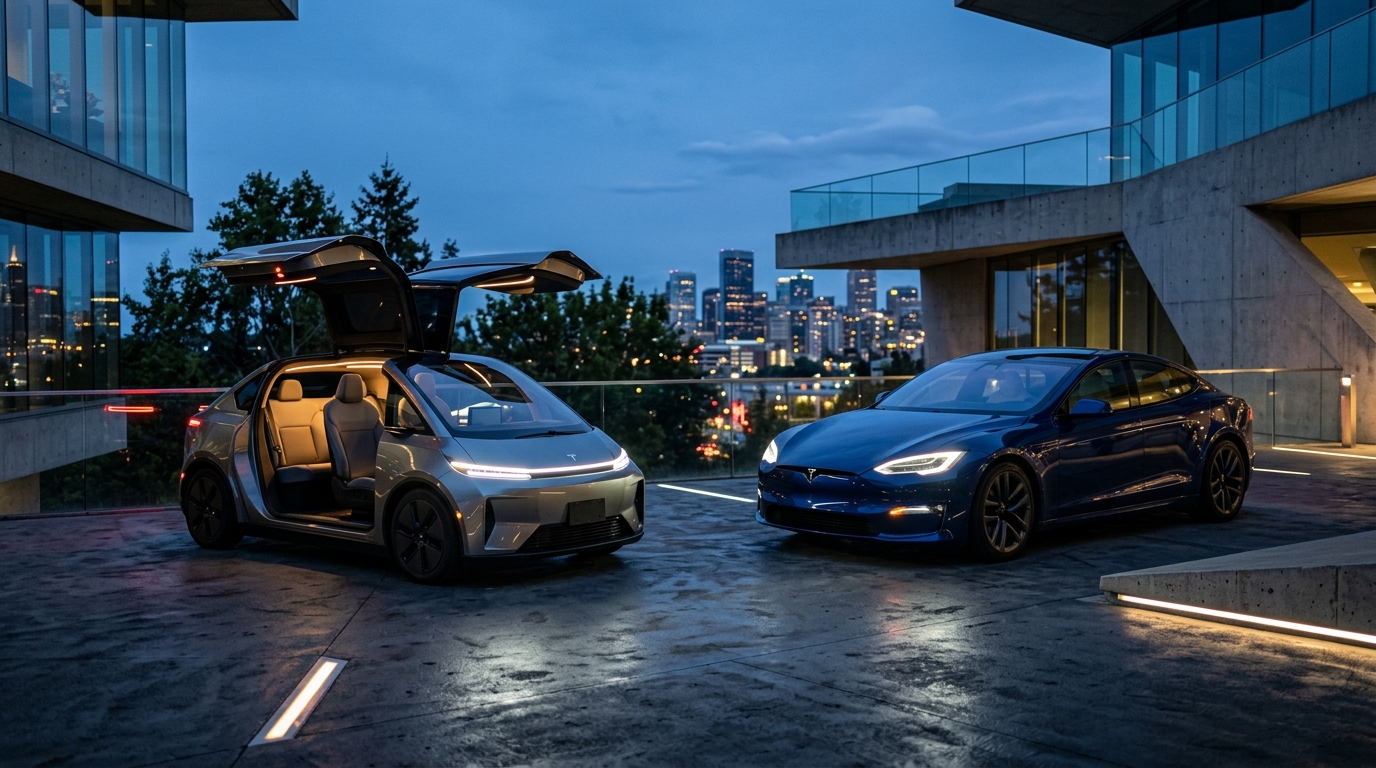
Tesla Model S Plaid (1,020 hp)

BYD Yangwang U7 (1,300 hp e4)
Which Device Wins and for Whom?
Tesla remains the benchmark for 0-60 mph quarter-mile drag superiority, global autonomous vision software, and minimalist user experience. BYD Yangwang U7 redefines performance chassis engineering with individual wheel torque vectoring, emergency water floating capability, and superior track cooling.
Side-by-Side Specification Matrix
Empirical technical comparisons with advantage markers.
| Metric / Specification | Tesla Model S Plaid (1,020 hp) | BYD Yangwang U7 (1,300 hp e4) |
|---|---|---|
| Motor Configuration | Tri-Motor (1 Front, 2 Rear Carbon-Sleeved) | Quad-Motor e4 (Individual permanent magnet motor per wheel) Advantage |
| Total Power Output | 1,020 horsepower | 1,306 horsepower Advantage |
| 0-100 km/h Acceleration | 2.1 seconds (with rollout subtracted) Advantage | 2.4 seconds |
| Battery Capacity & Chemistry | 100 kWh Lithium-Ion (400V architecture) | 135.5 kWh LFP Blade Battery (800V architecture) Advantage |
| Active Suspension | Adaptive Air Suspension with GPS-linked height memory | DiSus-Z electromagnetic active suspension (independent per corner) Advantage |
| Peak Charging Speed | 250 kW Supercharging | Dual-gun 500 kW ultra-fast DC charging Advantage |
Ready to explore available hardware?
Discover verified listings with physical inspection and transparent pricing.